What Are Medium Term Rentals? How Landlords Can Profit
What Is a Medium Term Rental ?
A medium term rentals, sometimes called a mid-term rental, is a housing arrangement where a property is leased for a period between one month and one year. It fills the gap between short-term rentals, such as vacation stays, and long-term leases that usually last a year or more.
These rentals are growing in popularity because people’s lifestyles and work habits are changing. Remote workers, traveling professionals, and families who need temporary housing now make up a large share of renters. Many people no longer want to commit to long leases or deal with constant hotel stays. Instead, they look for furnished homes or apartments where they can live comfortably for a few months without hassle.
Medium term rentals are particularly attractive to landlords who want reliable income without the constant turnover of short-term guests. They offer flexibility, steady occupancy, and fewer maintenance challenges.
Characteristics of Medium Term Rentals
Medium-term rentals have several distinct features that set them apart from traditional long-term housing or short vacation stays.
- Lease Duration
The typical lease length ranges from 30 days to 12 months. The most common duration is around three to six months. This period works well for people who want temporary stability without a year-long commitment. - Furnished Living Spaces
Most medium term rentals are fully furnished. They include basic furniture, kitchen essentials, linens, and appliances. Renters expect a move-in-ready space where they can live comfortably from day one. - Rent and Utility Setup
Monthly rent for medium term rentals is usually higher than for long-term leases but lower than nightly vacation rates. Utilities and Wi-Fi are often included in the rent, making it easier for tenants who prefer simple, all-inclusive arrangements. - Flexible Tenant Screening
Landlords typically conduct basic background and employment checks. Because the leases are shorter, the process is often simpler than with long-term tenants. The renter base tends to be responsible professionals or students, which reduces risk. - Steady Occupancy
Unlike short-term rentals that depend on constant bookings, mid-term leases offer consistent occupancy. This balance helps landlords keep income steady while minimizing turnover work.
Who Uses Medium-Term Rentals
Medium term rentals appeal to a wide range of people looking for temporary but stable housing.
- Traveling professionals such as nurses, doctors, and consultants often take assignments that last a few months. They prefer furnished spaces close to work that feel more comfortable than hotels.
- Remote workers are another major group. Many have the freedom to live anywhere, so they move between cities or countries while working online. Medium term rentals give them flexibility without the expense of short-term stays.
- Corporate employees relocating to a new city often use mid-term housing while searching for a permanent home. Companies may even cover the cost as part of a relocation package.
- Students and interns also find these rentals convenient. A single semester, training period, or internship is often too short for a traditional lease but too long for a hotel stay.
- Finally, families between homes or renovating their current residence often rent for a few months until their situation is settled.
Advantages and Disadvantages of Medium Term Rentals
Medium-term rentals offer many benefits for landlords and tenants, but they also come with some tradeoffs. Understanding both sides helps you decide if this rental strategy fits your goals.
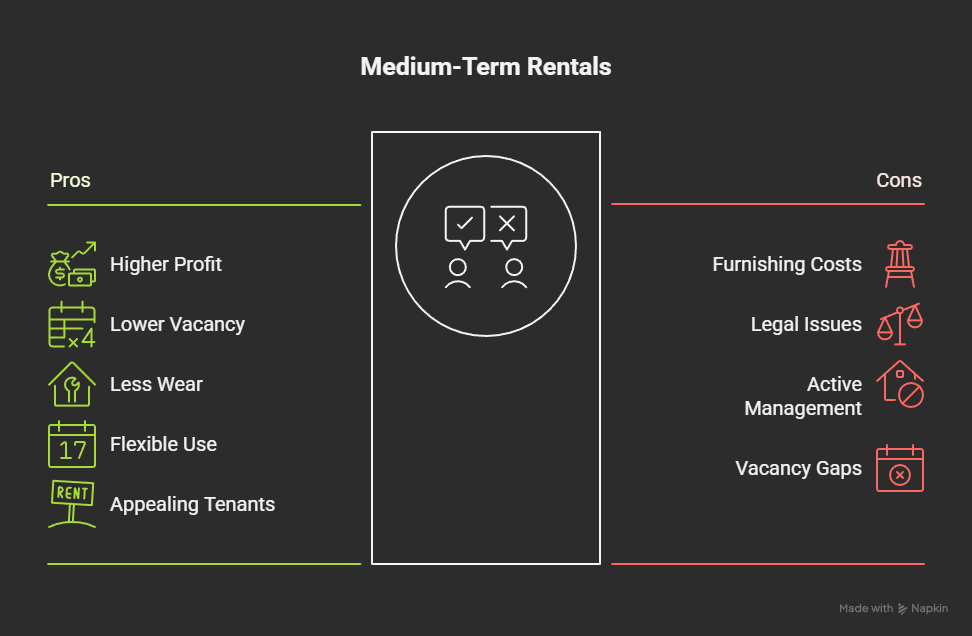
Advantages of Medium-Term Rentals
Higher Profit Potential
Landlords can often earn 20 to 40 percent more from a medium-term rental compared to a traditional long-term lease. The added income comes from the furnished setup and the convenience of flexibility.
Lower Vacancy Risk
While short-term rentals depend on frequent bookings, medium-term leases reduce downtime between tenants. Monthly stays create more predictable income.
Less Wear and Tear
Because tenants stay for several months rather than days, they usually treat the property more carefully. Turnovers are less frequent, and maintenance costs are lower compared to high-traffic vacation rentals.
Flexible Use
Landlords can adjust their strategy throughout the year. During slower months, they can offer medium-term stays, and during peak travel seasons, they can shift to short-term bookings if allowed by local rules.
Appealing Tenants
Tenants renting for months rather than days are more invested in maintaining the property. They tend to be professionals, families, or students who value stability.
Disadvantages of Medium Term Rentals
Furnishing Costs
A medium-term rental must be fully furnished and equipped. The initial expense for furniture, kitchenware, and décor can be high. Regular maintenance and replacement add to the cost.
Legal Considerations
Not every city has clear regulations for rentals lasting one to twelve months. Some may fall between short-term and long-term categories, so understanding local zoning and tax laws is essential.
Active Management
Managing move-ins, cleaning, and lease renewals still takes time. It is less demanding than running a nightly rental but more involved than a traditional year-long lease.
Vacancy Gaps and Marketing
Between tenants, landlords may experience short vacancy periods. Marketing to the right audience — professionals or students — requires effort and a good listing strategy.
How to Price Medium-Term Rentals
Setting the right price for a medium-term rental takes research and balance. You want to attract tenants while maintaining profitability.
Research Local Markets
Start by comparing similar properties in your area on websites like Furnished Finder, Zillow, or long-term sections of Airbnb. Look for listings with similar size, location, and amenities.
Include Utilities in the Price
Most renters prefer all-inclusive pricing. Add up the average cost of electricity, water, gas, internet, and maintenance, then build that amount into your rent.
Offer Discounts for Longer Stays
To attract tenants who will stay several months, provide tiered pricing. For instance, offer a small discount for a six-month commitment compared to a one-month stay.
Adjust Rates Seasonally
Demand fluctuates throughout the year. Review your rates every few months and adjust according to local trends and occupancy levels.
Add Value Through Amenities
Features like smart TVs, reliable Wi-Fi, parking, and in-unit laundry increase appeal. Comfortable furniture and clean design also help justify higher rent.
What to Include in a Medium Term Rental Lease
A clear lease agreement protects both the landlord and the tenant. It defines expectations and prevents disputes.
Key Elements to Include in a Lease
- Lease Duration
Specify exact start and end dates, including options for renewal. - Rent and Payment Terms
Include the amount, due dates, accepted payment methods, and any late fees. - Utilities and Services
List all included utilities and clarify who handles repairs or maintenance. - Furnishings and Inventory
Provide a detailed list of furniture, appliances, and household items. Conduct an inspection before and after each tenancy. - Deposit and Fees
Explain security deposit requirements, refund conditions, and deductions for damages. - Rules and Conduct
Set expectations for noise, guests, smoking, and pets to avoid misunderstandings. - Termination Clauses
Outline how either party may end the lease early and under what conditions.
Having these elements clearly written out ensures both parties understand their responsibilities and helps maintain a professional relationship.
How to Succeed in the Mid-Term Rental Market
Medium term rentals require smart planning and consistent effort. The following strategies help landlords stay competitive and profitable.
Know Your Ideal Tenant
Decide which audience you want to attract. Traveling professionals, remote workers, or students each have different needs. Tailor your property setup and marketing to match.
List on the Right Platforms
Use online rental platforms that cater to monthly stays. Good photos, accurate descriptions, and honest communication build trust.
Provide Quality Furnishings
Choose durable furniture and neutral designs. A comfortable and clean space increases occupancy and keeps tenants satisfied.
Simplify the Move-In Process
Create an easy check-in procedure. Provide clear instructions, key access details, and emergency contacts. Tenants who feel welcomed are more likely to stay longer and leave positive reviews.
Communicate Effectively
Stay responsive and professional. Address maintenance requests quickly. Good communication helps prevent problems before they grow.
Track Finances and Expenses
Keep accurate records of income, utilities, cleaning, and repairs. Understanding your costs helps you price your property properly and maximize returns.
Maintain and Refresh Regularly
After each tenancy, inspect the property carefully. Deep clean, repaint, and replace worn items as needed. A well-maintained rental always attracts better tenants.
Differences From Short-Term and Long-Term Rentals
Medium term rentals occupy a unique space between short-term and long-term arrangements. Each option has its own pros and cons depending on your goals.
| Feature | Short-Term Rentals | Medium-Term Rentals | Long-Term Rentals |
|---|---|---|---|
| Duration | Days to weeks | 1–12 months | 12+ months |
| Furnishing | Fully furnished | Fully furnished | Often unfurnished |
| Rent | Highest (nightly) | Moderate (monthly) | Lowest (annual) |
| Tenant Type | Tourists, vacationers | Professionals, relocators, students | Permanent residents |
| Turnover Rate | High | Moderate | Low |
| Management Level | Intensive | Moderate | Minimal |
| Legal Complexity | Highly regulated in many cities | Moderate | Simple and standardized |
Medium term rentals combine flexibility with stability. They provide predictable income without the full-time management of short-term rentals or the rigidity of long-term leases.
How to Manage a Medium-Term Rental Effectively
To keep a medium-term rental running smoothly, organization and consistency are key.
- Use a clear system for tracking payments, expenses, and maintenance schedules.
- Respond promptly to tenant inquiries and keep communication professional.
- Schedule regular inspections to prevent minor issues from becoming major repairs.
- Maintain accurate documentation for taxes and record-keeping.
- Build relationships with reliable cleaners and maintenance professionals.
Efficient management ensures a good experience for tenants and long-term profitability for property owners.
Conclusion
Medium term rentals offer a flexible and profitable approach to property management. They provide a middle ground for people who need temporary housing without committing to a year-long lease or paying high nightly rates.
For landlords, they present a chance to earn steady income, reduce vacancy risks, and work with responsible tenants. For renters, they offer comfort, flexibility, and convenience in one complete package.
As the demand for adaptable living arrangements continues to grow, medium term rentals stand out as a practical choice for both property owners and modern renters. By maintaining quality, transparency, and consistent service, landlords can build lasting success in this expanding market.