How Much is a Security Deposit When Renting in 2026?
Found your dream rental, signed the lease, feeling that new-place glow? Sweet! Until that moment when the landlord casually mentions, “Oh, and the security deposit is…” Suddenly, you’re doing mental gymnastics, trying to figure out where that hefty sum is going to come from. Seriously, it’s often a gut punch, especially if you’re a first-timer in the rental market, or if you’re packing up and heading to a whole new state where the rules might as well be in a different language. Caught completely flat-footed?
You’re not alone. So, let’s be real for a sec: How much *are* these things, anyway? What’s the deal with where your money actually goes? And—this is the big one—what do you have to do to make sure you actually *get that cash back*? This isn’t just a quick skim. We’re ripping off the band-aid, digging into average costs, unraveling those tricky state-specific quirks, and arming you with everything you need to manage your money smartly and, ultimately, get it refunded.
What is a Security Deposit?
When you rent a new place, you’ll usually put down a security deposit before moving in. It’s a one-time payment that stays with the landlord as a backup in case of property damage, skipped rent, or if the lease gets broken. You get that money back when you move out, provided the place is still in good shape—standard wear and tear doesn’t count against you. Learning how these deposits work ahead of time just makes it easier to plan your budget and avoid a headache later.
Why Do Landlords Require Security Deposits?
- Property Protection: Covers repairs for damages beyond normal wear and tear, like holes in walls or broken fixtures.
- Financial Security: Ensures funds are available for unpaid rent or utilities.
- Lease Compliance: Encourages tenants to follow lease terms, knowing their deposit is at stake.
- Cleaning Costs: May cover excessive cleaning if the property is left in poor condition.
How Much is a Security Deposit?
Security deposit really depends on where you’re looking, the kind of place it is, and what the local laws allow. Usually, you can expect to shell out about one month’s rent, but that’s not a hard rule. Depending on the building or the city, it can range anywhere from a flat $100 fee up to three months’ worth of rent.
Looking at data from recent housing reports, most renters (around 88%) end up paying a deposit. For a standard apartment, $700 is a pretty typical baseline, though that number climbs quickly if you’re eyeing a luxury rental or a full-sized house.
Factors That Affect Security Deposit Amounts
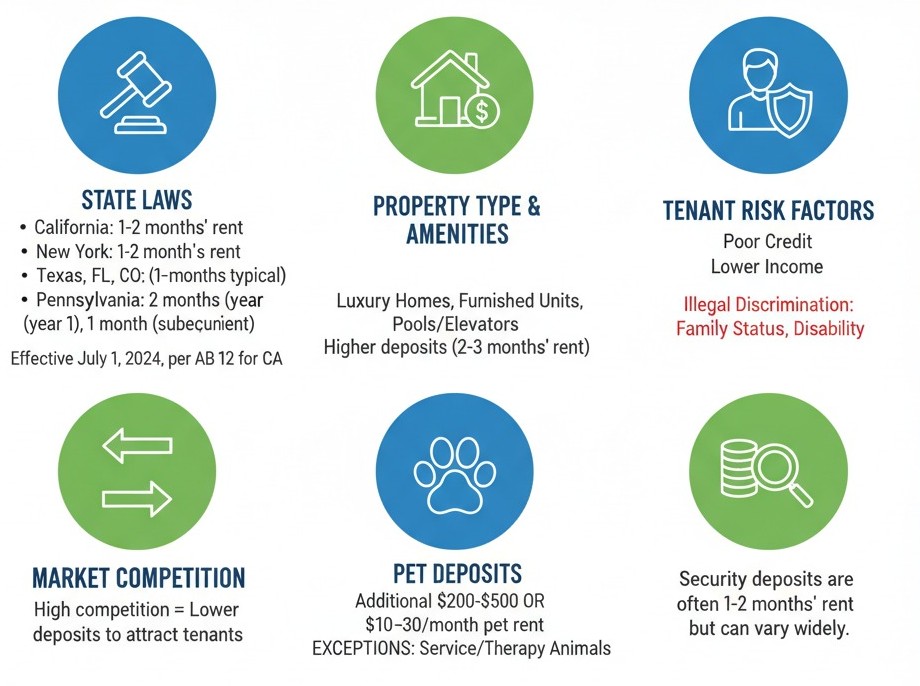
- State Laws: Many states cap security deposits. For example:
- California: Limits deposits to one month’s rent for unfurnished units and two months for furnished units (effective July 1, 2024, per Assembly Bill 12). Small landlords with four or fewer units can charge up to two months’ rent.
- New York: Caps deposits at one month’s rent for all rentals.
- Texas, Florida, Colorado: No state cap, so landlords can charge what they deem fair, often one to two months’ rent.
- Pennsylvania: Limits deposits to two months’ rent in the first year, reducing to one month in subsequent years.
- Property Type and Amenities: Luxury homes, furnished units, or properties with amenities like pools or elevators may have higher deposits (up to two or three months’ rent) due to higher maintenance costs.
- Tenant Risk Factors: Landlords may charge higher deposits for tenants with poor credit, lower income, or a history of evictions. However, charging more based on discriminatory factors (e.g., family status or disability) is illegal.
- Market Competition: In competitive markets, landlords may lower deposits to attract tenants. For example, if similar properties charge one month’s rent, a landlord charging more may lose applicants.
- Pet Deposits: Additional deposits ($200–$500) or non-refundable fees ($10–$30 monthly pet rent) may apply for pets, except for service or therapy animals.
Average Security Deposit Costs in 2026
Based on recent data, here’s what renters can expect:
- Apartments: Typically one month’s rent, averaging $1,000–$2,000 depending on location. In high-cost cities like Los Angeles ($2,895 median rent) or San Francisco ($3,495), deposits can reach $3,000–$4,000.
- Houses: Often one to two months’ rent, averaging $1,500–$3,000 for single-family homes. Luxury rentals may require up to three months’ rent.
- National Average: With the average U.S. rent at $1,980 in February 2026, a typical deposit is around $1,500–$2,000 for a standard rental.
Always check the lease agreement for the exact deposit amount, as it must be clearly stated. If the amount seems unusually high, verify your state’s legal limits.
State-Specific Security Deposit Regulations
Security deposit rules vary significantly by state. Below are key regulations for popular states, with a focus on 2026 updates:
California
- Cap: One month’s rent for unfurnished units; two months for furnished units. Small landlords (≤4 units) can charge up to two months’ rent.
- Return Deadline: 21 days after move-out, with an itemized statement for any deductions.
- Notes: Landlords cannot use deposits for COVID-19 rental debt (March 2020–September 2021) or early lease termination due to domestic violence.
Florida
- Cap: No state limit, but typically one to two months’ rent.
- Return Deadline: 15–60 days, depending on whether deductions are made and contested.
- Notes: Local ordinances may impose stricter rules, so check city regulations.
New York
- Cap: One month’s rent for all rentals, per the 2019 Housing Stability and Tenant Protection Act.
- Return Deadline: 14 days with an itemized statement; failure to provide forfeits the landlord’s right to withhold.
- Notes: Deposits must be held in an interest-bearing account, with interest (minus a 1% admin fee) paid annually to tenants.
Texas
- Cap: No state limit; commonly one to two months’ rent.
- Return Deadline: 30 days after move-out, with an itemized list of deductions if applicable.
- Notes: Tenants can opt for a monthly fee instead of a lump-sum deposit, and landlords may purchase insurance to cover risks.
Pennsylvania
- Cap: Two months’ rent in the first year; one month thereafter.
- Return Deadline: 30 days after move-out.
- Notes: Interest (minus a 1% admin fee) must be paid annually after the second year.
For a full list of state regulations, consult resources like Nolo.com or your state’s housing authority.
Tips for Renters: Managing and Recovering Your Security Deposit
To protect your deposit and increase the chances of a full refund, follow these tips:
- Understand the Lease: Confirm the deposit amount in writing before signing. Ensure it’s clearly stated in the lease agreement.
- Conduct a Move-In Inspection: During the initial walk-through, take photos and document existing damages. Have the landlord sign off on the condition report.
- Maintain the Property: Repair minor damages you cause, like small holes or scuffs, before moving out. Check with your landlord to avoid unnecessary repairs.
- Clean Thoroughly: Leave the property as clean as when you moved in. Some states require “broom clean” conditions, while others may mandate professional cleaning.
- Schedule a Move-Out Inspection: Arrange a walk-through with the landlord to discuss potential issues that could affect your deposit.
- Provide a Forwarding Address: Submit your new address in writing (via certified mail) to ensure the deposit is returned promptly.
- Know Your Rights: If the landlord withholds your deposit unfairly, send a demand letter with evidence (photos, lease copy). You may escalate to small claims court if unresolved.
- Avoid Using Deposit as Rent: The deposit is not meant to cover the last month’s rent unless specified in the lease. Using it this way may lead to deductions.
Additional Deposits and Fees
Beyond the standard security deposit, renters may encounter:
- Pet Deposits: $200–$500 (refundable) or monthly pet rent ($10–$30). Service animals are exempt.
- Cleaning Deposits: Covers professional cleaning if the property is left dirty.
- Key Deposits: For replacing lost keys or locks.
- Utility Deposits: For unpaid utilities, especially if included in rent.
Always clarify whether these are refundable and included in the lease.
Conclusion
When you’re gearing up to rent a new place in 2026, you can generally expect to pay a security deposit that’s roughly equal to one month’s rent. Depending on the state you’re in, the property type, and your own tenant profile, that amount can fluctuate anywhere from a flat $100 up to three months’ rent.
To make sure you get that money back later, it’s all about being proactive. Get to know your state’s specific laws, take plenty of photos and videos to document the property’s condition the day you move in, and keep the lines of communication open with your landlord.
Always take the time to read through your lease, know your rights as a renter, and check your local regulations so you aren’t hit with any surprises down the road. If you’re looking for more ways to manage your rental journey—like tools that turn your on-time rent into a credit score boost—be sure to check out AxcessRent’s reporting services.
FAQs About Security Deposits
1. How much is a typical security deposit?
A typical security deposit is one month’s rent, averaging $1,500–$2,000 in 2026, though it can range from $100 to three months’ rent based on location, property type, and tenant factors.
2. Can a landlord charge more for bad credit?
Yes, landlords may charge higher deposits for tenants with poor credit or eviction history, but only within state limits. Discriminatory practices are illegal.
3. When should I expect my deposit back?
Most states require landlords to return deposits within 14–60 days after move-out, often with an itemized deduction statement. Check your state’s laws.
4. What can a landlord deduct from my deposit?
Deductions are allowed for:
- Damage beyond normal wear and tear.
- Unpaid rent or utilities (except COVID-19 rental debt in some states).
- Excessive cleaning costs.
- Unreturned keys or unremoved belongings.
5. What is “normal wear and tear”?
Normal wear and tear includes minor deterioration from regular use, like faded paint or worn carpets. Damage like holes in walls or broken appliances is not covered.
6. Can I use my deposit for the last month’s rent?
No, unless the lease allows it. Using the deposit as rent may result in deductions or legal issues.
7. What if my landlord doesn’t return my deposit?
Send a demand letter with evidence (photos, lease). If unresolved, consider small claims court or contact your state’s housing authority.