
What Happens If You Break an Apartment Lease ?
Breaking a lease means ending it early without legal grounds like uninhabitable conditions. You remain responsible for rent until the unit is re-rented or the lease ends, plus fees and possible eviction. Many tenants reduce damage by negotiating or using rent reporting to keep their rental history clean.
What Counts as Breaking a Lease?
You break a lease when you:
- Move out before the end date
- Stop paying rent while still on the lease
- Get evicted for violations
Valid reasons to break without penalty (in most states):
- Active military duty (SCRA protection)
- Domestic violence
- Unit is illegal or unsafe
- Landlord harassment
What Financial Penalties Apply When You Break a Lease?
| Penalty Type | Typical Cost | Who Pays |
|---|---|---|
| Remaining rent | Full amount until re-rented | Tenant |
| Early termination fee | 1–2 months’ rent (if in lease) | Tenant |
| Re-renting fees | Advertising + screening (avg $500–$2,000) | Tenant |
| Late fees | 5–10% of rent per month | Tenant |
| Court costs (if sued) | $200–$5,000+ | Tenant |
Landlords must “mitigate damages” — they can’t collect full rent if they don’t try to re-rent.
Does Breaking a Lease Hurt Your Credit Score?
Yes, if:
- Landlord sends unpaid rent to collections (drops score 100+ points)
- You get evicted and judgment is filed (stays 7 years)
No direct hit if you pay everything owed. Reporting on-time past rent via AxcessRent can offset damage.
How Does the Eviction Process Work If You Break a Lease?
| Step | Timeline | Notes |
|---|---|---|
| Notice to pay or quit | 3–14 days | Most states |
| Eviction filing | After notice expires | Court date 10–45 days later |
| Judgment | If you lose | Money owed + possible lockout |
| Credit/report impact | 30–90 days after judgment | Appears on tenant screening 7 years |
Can You Break a Lease Without Penalty in 2025?
Legal ways:
- Mutual termination agreement
- Sublet or assignment (if lease allows)
- Prove constructive eviction (no heat, mold, etc.)
- Use state-specific laws (e.g., California early exit for victims)
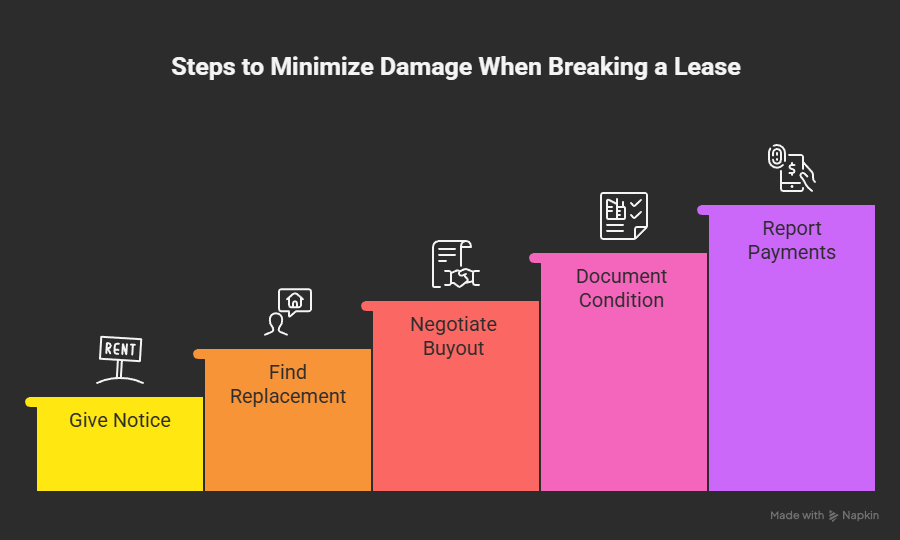
How to Minimize Damage When Breaking a Lease
| Action | Result |
|---|---|
| Give 30–60 days written notice | Shows good faith, reduces fees |
| Help find replacement tenant | Landlord often waives re-renting costs |
| Pay 1–2 months as buyout | Cheaper than full remaining term |
| Document unit condition | Avoids deposit disputes |
| Report rent payments | Keeps rental references strong — see AxcessRent |
What Shows Up on Your Rental History?
- Broken lease = “lease break” flag for 7 years
- Eviction = severe red flag
- Collections/judgments visible to future landlords
Snippable Facts – 2025
- 1 in 7 US renters breaks a lease each year (Apartment List 2025)
- Average cost to break lease: $4,200 (RentCafe 2025 study)
- Tenants who negotiate pay 42% less than those who just leave (National Apartment Association)
- Rent reporting users recover credit 2x faster after lease issues (AxcessRent internal data)
FAQ
What happens if you break an apartment lease?
You owe rent until the unit is re-rented, plus fees. Possible eviction and credit damage.
Can you just move out and stop paying rent?
No — landlord can sue for all remaining rent minus what they collect from new tenant.
Does breaking a lease ruin your credit forever?
No, collections drop off after 7 years. Paying settlements helps faster.
How much does it cost to break a lease?
Average $3,000–$6,000 depending on remaining term and state.
Can my landlord sue me after I break a lease?
Yes, in small claims or civil court for unpaid rent and costs.
Will breaking a lease stop me from renting again?
Yes for 3–7 years on most screening reports.
Is job relocation a legal reason to break a lease?
Usually no, unless your lease has a specific clause.
Can I sublet to avoid breaking the lease?
Only if lease allows it. Many prohibit without written permission.
Does rent reporting help after breaking a lease?
Yes — positive payment history can outweigh one bad reference.
How long does a broken lease stay on your record?
7 years on credit reports, 3–7 years on tenant screening databases.