What Is a Good Strategy to Improve Your Credit Score?
Improving your credit score is one of the most powerful steps you can take to secure your financial future. A higher credit score opens doors to better loan rates, lower interest on credit cards, and even easier apartment rentals. But it’s not always clear how to raise your credit score effectively, especially with so much conflicting advice out there. Whether you’re asking, “What is a good strategy to improve your credit score?” or “How can I improve my credit score fast?” this guide has you covered. We’ll break down proven strategies, and answer related FAQs to help you.
Why Improving Your Credit Score Matters
Your credit score, typically ranging from 300 to 850 (FICO or VantageScore), reflects your creditworthiness. Lenders, landlords, and even employers use it to gauge your financial reliability. A good credit score (670–739) or excellent score (740+) can save you thousands on interest and unlock better financial opportunities. A low score, however, can lead to higher costs or outright denials.
In 2025, with rising interest rates and tighter lending standards, a strong credit score is more critical than ever. This guide will walk you through strategies to improve your credit score, avoid common pitfalls, and answer questions like “What are five things you can do to improve your credit score?” Let’s dive into the steps to take control of your credit.
Understanding Your Credit Score
Before improving your score, know what goes into it. The FICO score, used by 90% of lenders, is based on five factors:
- Payment History (35%): Whether you pay bills on time.
- Credit Utilization (30%): The percentage of available credit you’re using.
- Length of Credit History (15%): How long you’ve had credit accounts.
- Credit Mix (10%): Variety of credit types (e.g., credit cards, loans).
- New Credit (10%): Recent credit inquiries or new accounts.
VantageScore uses similar factors but weighs them slightly differently. Check your score for free through services like Credit Karma, Experian, or your bank. Review your credit report from Equifax, Experian, and TransUnion at AnnualCreditReport.com to spot errors or areas to improve.
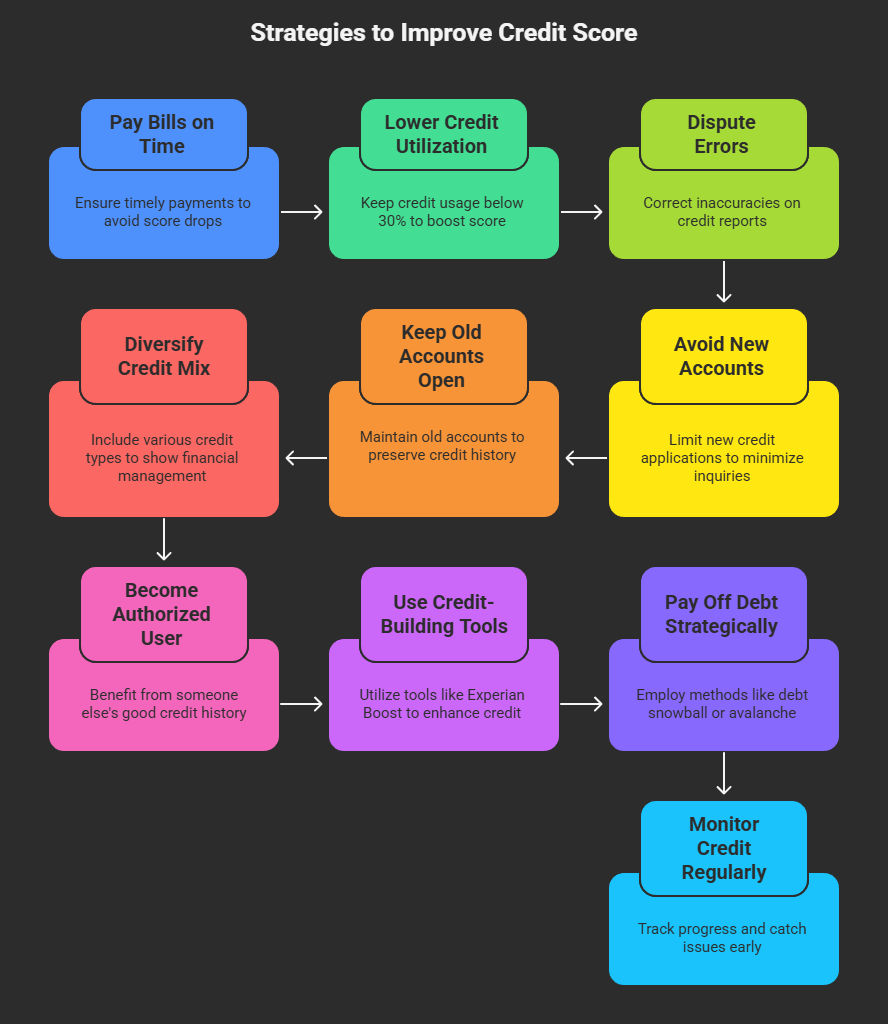
10 Proven Strategies to Improve Your Credit Score
Here’s a detailed, step-by-step guide to boost your credit score in 2025, addressing queries like “How to improve the credit score?” and “Is there a way to improve credit score?”
1. Pay Your Bills on Time
Payment history is the biggest factor in your credit score. Late payments, even by a few days, can drop your score significantly. To stay on track:
- Set Up Auto-Pay: Ensure minimum payments are made automatically for credit cards, loans, and utilities.
- Use Reminders: Apps like Mint or calendar alerts can help you avoid missed due dates.
- Catch Up on Past-Due Accounts: If you’re behind, pay overdue balances to stop further damage. Negotiate with creditors to remove late payment marks if you pay in full (called “pay for delete”).
Pro Tip: Even one 30-day late payment can lower a 700 score by 60–100 points, so prioritize timely payments.
2. Lower Your Credit Utilization Ratio
Credit utilization—how much of your available credit you’re using—should stay below 30%. For example, if your credit card limit is $10,000, keep your balance under $3,000. To reduce utilization:
- Pay Down Balances: Focus on high-balance cards first. Pay more than the minimum to reduce debt faster.
- Request a Credit Limit Increase: Higher limits lower your utilization ratio, as long as you don’t spend more.
- Spread Balances: Use multiple cards to keep individual card utilization low.
Example: If you owe $5,000 on a $10,000 limit (50% utilization), paying it down to $2,000 (20%) can boost your score significantly.
3. Dispute Errors on Your Credit Report
Errors on your credit report—like incorrect late payments or accounts that aren’t yours—can drag down your score. In 2025, with data breaches on the rise, checking your report is crucial:
- Get Your Report: Visit AnnualCreditReport.com for free reports from Equifax, Experian, and TransUnion.
- Spot Errors: Look for wrong balances, duplicate accounts, or fraudulent activity.
- File Disputes: Submit disputes online or by mail with evidence (e.g., payment receipts). Bureaus must investigate within 30 days.
Fixing errors can raise your score quickly—sometimes by 20–50 points if a major issue is resolved.
4. Avoid Opening Too Many New Accounts
Each new credit application triggers a hard inquiry, which can lower your score by 5–10 points. Multiple inquiries in a short period signal risk to lenders. To minimize impact:
- Limit Applications: Only apply for credit you need, like a mortgage or essential credit card.
- Shop Smart: When applying for loans (e.g., auto or mortgage), do so within a 14–45-day window to count as one inquiry.
- Avoid Store Cards: Retail cards often have high interest rates and low limits, hurting your score.
5. Keep Old Accounts Open
The length of your credit history matters. Closing old accounts shortens your credit age, which can lower your score. Instead:
- Keep Cards Active: Use old credit cards occasionally (e.g., for small purchases) and pay them off to keep them open.
- Avoid Annual Fees: If an old card has high fees, ask the issuer to switch to a no-fee card.
Example: A 10-year-old credit card with no balance boosts your credit age, even if you rarely use it.
6. Diversify Your Credit Mix
Having a mix of credit types—like credit cards, a mortgage, or an auto loan—shows you can manage different debts. If you only have credit cards:
- Consider a Small Loan: A credit-builder loan from a credit union (e.g., $500–$1,000) can diversify your credit without much risk.
- Use Secured Cards: If you’re rebuilding credit, a secured card (backed by a deposit) adds variety.
Be cautious—don’t take on debt you can’t handle just to diversify.
7. Become an Authorized User
If you have a trusted friend or family member with good credit, ask to be added as an authorized user on their credit card. Their positive payment history can boost your score:
- Choose Wisely: Pick someone with a long history of on-time payments and low utilization.
- No Usage Needed: You don’t need to use the card to benefit, but confirm the issuer reports authorized users to credit bureaus.
8. Use Credit-Building Tools
In 2025, tools like Experian Boost and AxcessRent can help:
- Experian Boost: Reports on-time utility, phone, and streaming service payments to boost your score (free to use).
- AxcessRent: Reports rent payments to credit bureaus, ideal for renters. For example, consistent $1,500/month rent payments can improve your payment history.
These tools are especially helpful if you have a thin credit file (few accounts).
9. Pay Off Debt Strategically
High debt levels hurt your score. Use these methods to pay down debt:
- Debt Snowball: Pay off smallest balances first for quick wins.
- Debt Avalanche: Tackle high-interest debts first to save money.
- Consolidate Debt: Combine debts into a lower-interest personal loan to simplify payments and reduce utilization.
Example: Consolidating $10,000 in credit card debt at 20% interest into a 7% personal loan can save thousands and boost your score as utilization drops.
10. Monitor Your Credit Regularly
Track your progress to stay motivated and catch issues early:
- Free Monitoring: Use Credit Karma or Experian for weekly updates.
- Paid Services: Identity protection services like LifeLock offer fraud alerts and deeper monitoring.
- Set Goals: Aim for a specific score (e.g., 700) and track progress monthly.
Regular monitoring helps you adjust strategies and spot fraud, which is critical in 2025’s digital landscape.
Five Things You Can Do to Improve Your Credit Score
To directly address the query “What are five things you can do to improve your credit score?” here are five key actions:
- Pay Bills on Time: Set up auto-pay to avoid late payments, which heavily impact your score.
- Reduce Credit Card Balances: Keep utilization below 30% by paying down high-balance cards.
- Dispute Report Errors: Check your credit report and fix inaccuracies to gain quick points.
- Keep Old Accounts Open: Maintain long-standing accounts to boost your credit history length.
- Use Experian Boost: Report utility and rent payments to add positive data to your credit file.
How to Improve Your Credit Score Fast
For those asking “How to improve the credit score fast?” focus on these high-impact moves:
- Pay Down High-Utilization Cards: Reducing balances below 30% can raise your score in 30–60 days.
- Dispute Major Errors: Correcting wrong late payments or fraudulent accounts can yield quick results.
- Add Rent Payments: Use AxcessRent or Experian Boost to report rent and utilities, boosting your score within a month.
- Negotiate Late Payment Removals: Contact creditors to remove one-time late payments from your report.
- Become an Authorized User: Piggyback on someone’s good credit for a fast score bump.
These steps can improve your score by 20–100 points in 1–3 months, depending on your starting point.
Common Mistakes to Avoid
When working to improve your credit score, steer clear of these pitfalls:
- Missing Payments: Even one late payment can undo months of progress.
- Maxing Out Cards: High utilization signals risk to lenders.
- Closing Old Accounts: This shortens your credit history and raises utilization.
- Applying for Too Much Credit: Multiple hard inquiries can drop your score.
- Ignoring Errors: Uncorrected report errors can cost you points unnecessarily.
State-Specific Credit Considerations
Credit laws and resources vary by state:
- California: Strong consumer protections allow you to freeze your credit for free to prevent fraud.
- Florida: No state income tax means more money to pay down debt, but watch for predatory lenders.
- Ohio: Offers credit counseling through state-approved agencies, ideal for debt management.
Check your state’s consumer protection website for local resources and laws.
Tools and Resources for Improving Your Credit Score
- AxcessRent: Report rent payments to boost your score (ideal for renters).
- Experian Boost: Add utility and streaming payments to your credit file (free).
- Credit Karma: Monitor your score and get personalized tips (free).
- AnnualCreditReport.com: Access free credit reports from all three bureaus.
- National Foundation for Credit Counseling (NFCC): Find affordable credit counseling.
Conclusion
Improving your credit score in 2025 is achievable with the right strategies. By paying bills on time, lowering credit utilization, disputing errors, and using tools like AxcessRent or Experian Boost, you can raise your score steadily and quickly. Avoid common mistakes like missing payments or closing old accounts to protect your progress. Whether you’re aiming for a 700+ score or rebuilding from a low point, this guide provides the roadmap to success. Start today by checking your credit report at AnnualCreditReport.com and exploring tools like AxcessRent to report rent payments. For more tips, visit AxcessRent to streamline your financial journey.
Resources:
- AxcessRent: Report rent payments to boost your credit score.
- Experian Boost: Add utility and streaming payments to your credit file.
- Credit Karma: Free credit monitoring and tips.
- AnnualCreditReport.com: Free credit reports from Equifax, Experian, and TransUnion.
- NFCC: Affordable credit counseling services.
FAQs About Improving Your Credit Score
What Is a Good Strategy to Improve Credit Score?
A good strategy includes:
- Paying all bills on time with auto-pay.
- Keeping credit utilization below 30%.
- Disputing errors on your credit report.
- Maintaining old accounts to extend credit history.
- Using tools like Experian Boost or AxcessRent to report rent and utility payments.
How to Improve the Credit Score?
To improve your credit score:
- Pay bills on time to build a strong payment history.
- Reduce credit card balances to lower utilization.
- Fix errors on your credit report via disputes.
- Avoid opening too many new accounts.
- Use credit-building tools like AxcessRent or secured cards.
What Are Five Things You Can Do to Improve Your Credit Score?
- Pay bills on time using auto-pay.
- Reduce credit utilization below 30%.
- Dispute inaccuracies on your credit report.
- Keep old accounts open to maintain credit history.
- Use Experian Boost to report rent and utility payments.
Is There a Way to Improve Credit Score?
Yes, you can improve your credit score by:
- Making timely payments consistently.
- Paying down high credit card balances.
- Correcting credit report errors.
- Becoming an authorized user on a trusted person’s account.
- Using tools like AxcessRent to report positive payment history.
How Long Does It Take to Improve a Credit Score?
Minor improvements (20–50 points) can take 1–3 months with timely payments and lower utilization. Major gains (100+ points) may take 6–12 months, especially if rebuilding from bad credit. Consistent effort is key.
Can Rent Payments Help Improve My Credit Score?
Yes, services like AxcessRent and Experian Boost report on-time rent payments to credit bureaus, boosting your payment history. This is especially helpful for renters with thin credit files.