How to get house ready for rent out in 2025 ?
Renting out your house can be a smart way to earn extra income, build wealth, or cover your mortgage while you’re away. But it’s not as simple as putting up a “For Rent” sign. From legal requirements to finding reliable tenants, there’s a lot to get right to avoid costly mistakes. Whether you’re wondering how to rent out your house or how to rent out a room in your house, this guide will walk you through every step.
Why Rent Out Your House?
Renting out your home can provide steady cash flow, especially in high-demand areas. In 2025, with rising housing costs and a strong rental market, it’s a great time to become a landlord. Here are some reasons to consider:
- Passive Income: Monthly rent can cover your mortgage or generate extra cash.
- Property Value Growth: Keep your home as an appreciating asset while earning income.
- Flexibility: Rent out your entire house or just a room to suit your needs.
- Tax Benefits: Deduct expenses like repairs, insurance, and property management fees (consult a tax professional).
But it’s not without challenges. Tenant issues, maintenance costs, and legal compliance can trip up beginners. This guide will help you avoid common pitfalls and rent out your house successfully.
Step-by-Step Guide to Renting Out Your House
Here’s how to rent out your house in 12 clear steps, tailored for beginners and optimized for 2025’s rental market.
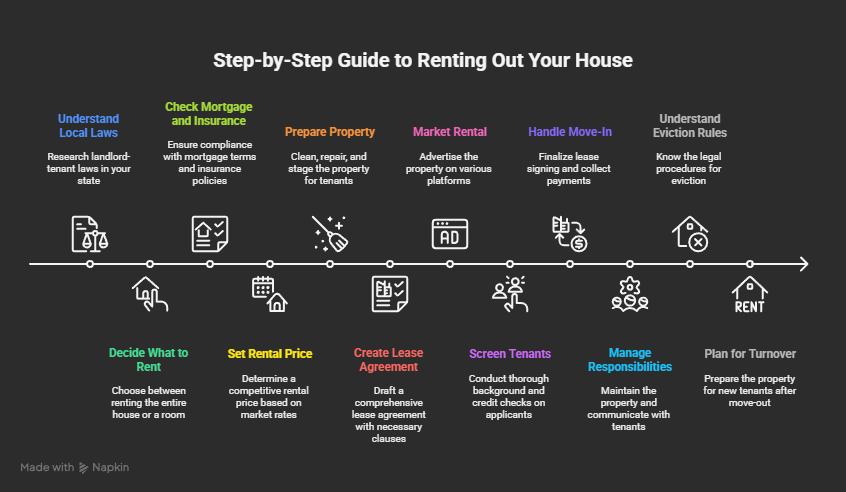
Step 1: Understand Local Landlord-Tenant Laws
Before you list your property, research your state’s landlord-tenant laws. These rules cover security deposits, eviction processes, and tenant rights. For example:
- California: Requires a 60-day notice for rent increases and strict eviction rules under rent control in cities like San Francisco.
- Florida: Allows landlords to set security deposit amounts but requires specific procedures for evictions.
- Ohio: Mandates a three-day notice to pay or quit for non-payment of rent.
Check your state’s housing authority website or resources like Nolo.com for details. Violating these laws can lead to lawsuits or voided leases, so consult a local attorney if needed.
Step 2: Decide What to Rent
You can rent out your entire house or just a room, depending on your goals:
- Entire House: Ideal if you’re relocating, own a second home, or want higher rental income. This requires more maintenance and legal prep but yields more rent.
- Single Room: Perfect for homeowners living in the property who want extra income. You’ll share space, so set clear boundaries in the lease (e.g., access to common areas).
Deciding early helps you set the right price and prepare the property accordingly.
Step 3: Check Your Mortgage and Insurance
Before renting, confirm with your lender that renting is allowed. Some mortgages have “owner-occupancy” clauses that prohibit rentals for a set period (usually 1–2 years). Also:
- Homeowners Insurance: Standard policies don’t cover rentals. Switch to a landlord insurance policy, which covers property damage, liability, and loss of rental income.
- HOA Rules: If your home is in a homeowners association, check for rental restrictions (e.g., minimum lease terms or tenant approval processes).
Contact your lender and insurance agent to avoid surprises.
Step 4: Set a Competitive Rental Price
Pricing your rental correctly is key to attracting tenants and maximizing income. Research local rental listings on platforms like Zillow, Apartments.com, or Craigslist. Consider:
- Market Rates: Check similar properties in your area. For example, a 3-bedroom house in Columbus, OH, might rent for $1,500–$2,000/month in 2025, while a room might fetch $600–$800.
- Property Features: Highlight amenities like parking, updated kitchens, or proximity to public transit.
- Seasonal Trends: Demand peaks in summer; adjust pricing if listing off-season.
Use tools like Rentometer to analyze local rates and avoid overpricing, which can deter tenants, or underpricing, which cuts profits.
Step 5: Prepare Your Property
A well-maintained property attracts better tenants and commands higher rent. Before listing:
- Clean Thoroughly: Deep-clean carpets, windows, and appliances. Consider hiring professionals.
- Make Repairs: Fix leaky faucets, cracked walls, or faulty wiring. Small upgrades (e.g., fresh paint) boost appeal.
- Safety Compliance: Install smoke detectors, carbon monoxide alarms, and fire extinguishers as required by local codes.
- Staging: For an entire house, light staging (e.g., neutral furniture) can help tenants visualize living there.
If renting a room, ensure shared spaces are tidy and private areas are clearly defined.
Step 6: Create a Solid Lease Agreement
A lease is your legal protection. Use a state-specific lease template from sites like eForms or Rocket Lawyer, and include:
- Rent Details: Amount, due date, and payment methods.
- Lease Term: Month-to-month or fixed-term (e.g., one year).
- Rules: Pets, smoking, guest policies, and maintenance responsibilities.
- Security Deposit: Amount and conditions for return (follow state laws).
- Room-Specific Terms: If renting a room, specify access to common areas (kitchen, bathroom) and house rules.
Have an attorney review the lease to ensure it complies with local laws.
Step 7: Market Your Rental
To find tenants, create a compelling listing:
- Photos: Take high-quality photos in good lighting, showcasing key areas like the kitchen, living room, and bedrooms.
- Description: Highlight features like “newly renovated,” “close to downtown,” or “utilities included.”
- Platforms: Post on Zillow, Apartments.com, Craigslist, and local Facebook groups. Use hashtags like #HouseForRent or #RoomForRent on social media.
For rooms, emphasize shared space benefits and house rules to attract compatible tenants.
Step 8: Screen Tenants Thoroughly
Bad tenants can cause headaches. Screen applicants to find reliable ones:
- Application: Collect name, contact info, employment history, and references.
- Credit Check: Use services like TransUnion SmartMove to check credit and payment history.
- Background Check: Verify criminal history and eviction records.
- Income Verification: Ensure tenants earn 2.5–3x the rent (e.g., $4,500/month for $1,500 rent).
- References: Contact previous landlords for insights on reliability.
For room rentals, meet applicants in person to assess compatibility, especially since you’ll share space.
Step 9: Handle the Move-In Process
Once you select a tenant:
- Sign the Lease: Have all parties sign the lease and provide copies.
- Collect Payments: Get the first month’s rent and security deposit (check state limits, e.g., 2 months’ rent in California).
- Walkthrough: Conduct a move-in inspection with a checklist, noting existing damage. Take photos for documentation.
- Provide Keys: Hand over keys once payments and paperwork are complete.
For room rentals, set clear expectations about shared spaces during the walkthrough.
Step 10: Manage Ongoing Responsibilities
As a landlord, you’re responsible for:
- Maintenance: Respond promptly to repair requests (e.g., plumbing issues).
- Rent Collection: Use tools for automated payments.
- Communication: Keep open lines with tenants for issues or updates.
- Inspections: Schedule periodic checks (with proper notice, per state law) to ensure property condition.
If renting a room, maintain house rules and address conflicts quickly to keep the peace.
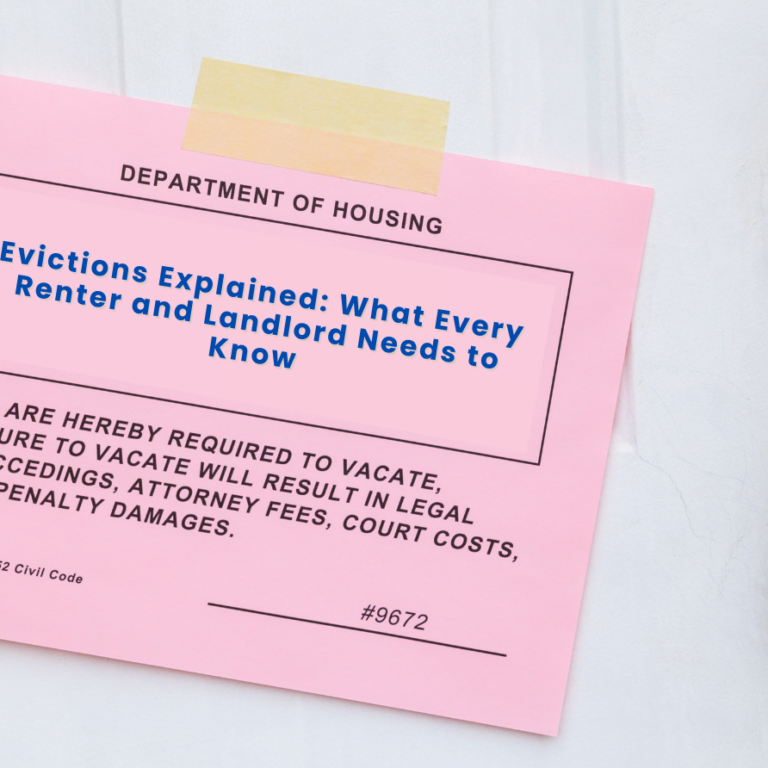
Step 11: Understand Eviction Rules
If a tenant doesn’t pay rent or violates the lease, you may need to evict. Follow state laws:
- Issue a Notice: For non-payment, serve a three-day notice to pay or quit. For other violations, issue a notice to cure or quit (e.g., 7 days in Florida).
- File for Eviction: If unresolved, file an unlawful detainer lawsuit in court.
- Court Process: Attend hearings and obtain a writ of possession if approved.
Mistakes in notices (e.g., incorrect rent amount) can void them, so double-check details (see our guide on what can void a three-day notice).
Step 12: Plan for Turnover
When a tenant moves out:
- Inspect the Property: Check for damage beyond normal wear and tear.
- Return Security Deposit: Follow state laws (e.g., 21 days in California) and deduct only for documented damages.
- Prepare for New Tenants: Clean, repair, and relist the property.
For room rentals, update house rules based on past experiences to improve future tenancies.
How to Rent Out a Room in Your House
Renting out a room is a great option if you’re living in the home and want extra income. Here’s how it differs from renting the entire house:
- Set Boundaries: Clearly define which areas (e.g., kitchen, living room) are shared and which are private. Include this in the lease.
- Screen for Compatibility: Meet potential roommates to ensure they fit your lifestyle (e.g., quiet hours, cleanliness).
- House Rules: Specify rules for guests, noise, and shared responsibilities (e.g., cleaning common areas).
- Utilities: Decide if utilities are included in the rent or split among tenants.
- Privacy: Ensure your personal space is secure (e.g., lockable doors).
Use platforms like Roommates.com or SpareRoom to find tenants, and screen them as rigorously as you would for a full house rental.
7 Common Mistakes to Avoid When Renting Out Your House
Here are pitfalls to steer clear of:
- Skipping Legal Research: Ignoring state or local laws can lead to voided leases or lawsuits.
- Overpricing the Rent: Setting rent too high scares off tenants; use market research to price competitively.
- Neglecting Repairs: Failing to fix issues before listing deters quality tenants and risks legal issues.
- Poor Tenant Screening: Skipping background checks can lead to unreliable tenants.
- Vague Lease Terms: Ambiguous rules cause disputes; be specific about rent, maintenance, and policies.
- Ignoring Insurance: Not updating to landlord insurance leaves you exposed to financial risks.
- Mishandling Evictions: Incorrect notices or procedures can delay evictions and cost you money.
State-Specific Considerations
Rules vary by state, impacting how you rent out your house or room:
- California: Strict rent control in cities like Los Angeles limits rent increases. Security deposits can’t exceed two months’ rent for unfurnished properties.
- Florida: No rent control, but landlords must follow specific eviction notice periods (e.g., three days for non-payment).
- Ohio: Flexible landlord laws, but non-compliance notices must detail specific lease violations.
Check local housing authorities or consult an attorney to ensure compliance.
Tools and Resources for Renting Out Your House
- AxcessRent: Automate rent collection and send payment reminders to reduce late payments.
- Zillow Rental Manager: List your property and screen tenants easily.
- Nolo.com: Access state-specific lease templates and legal guides.
- SmartMove: Run credit and background checks on applicants.
- Cozy (now Apartments.com): Manage leases and payments online.
Conclusion
Renting out your house or a room in 2025 can be a profitable venture if done right. By following these 12 steps—researching laws, setting a competitive price, preparing your property, and screening tenants—you can avoid common mistakes and build a successful rental business. Use tools like AxcessRent to streamline payments and reduce late rent issues. For state-specific guidance, check resources like Nolo.com or consult a local attorney. Download a free lease template from eForms to get started, and visit AxcessRent for more landlord tips and tools to make renting stress-free.
Resources:
- AxcessRent: Automate rent collection and tenant management.
- Nolo.com: State-specific legal guides and lease templates.
- Zillow Rental Manager: List and manage rentals.
- Rentometer: Analyze local rental rates.
FAQs About Renting Out Your House
How Do You Rent Out Your House?
To rent out your house:
- Research local landlord-tenant laws.
- Confirm with your lender and switch to landlord insurance.
- Set a competitive rent price based on market research.
- Prepare the property with cleaning and repairs.
- Create a detailed lease agreement.
- Market the rental with high-quality photos and listings.
- Screen tenants thoroughly (credit, background, income).
- Sign the lease, collect payments, and conduct a move-in walkthrough.
- Manage maintenance and rent collection.
- Follow state eviction laws if needed.
How Do You Rent Out a Room in Your House?
To rent a room:
- Define shared and private spaces in the lease.
- Set house rules (e.g., guests, noise, utilities).
- Price the room based on local rates (e.g., $600–$800 in Ohio).
- List on platforms like Roommates.com or Craigslist.
- Screen tenants for compatibility, credit, and background.
- Conduct a walkthrough and set expectations for shared living.
- Use tools like AxcessRent for payment management.
What Are the Biggest Mistakes When Renting Out Your House?
Common mistakes include:
- Ignoring local laws, leading to legal issues.
- Overpricing rent, reducing tenant interest.
- Skipping repairs, lowering property appeal.
- Poor tenant screening, risking unreliable tenants.
- Vague lease terms, causing disputes.
- Not updating insurance to a landlord policy.
- Mishandling eviction notices, delaying the process.
What Are the Legal Requirements for Renting Out a House?
Legal requirements vary by state but generally include:
- Complying with landlord-tenant laws (e.g., security deposit limits, eviction notices).
- Ensuring the property meets safety codes (smoke detectors, CO alarms).
- Using a written lease agreement.
- Providing proper notice for inspections or entry (e.g., 24 hours in most states).
- Following fair housing laws to avoid discrimination.
How Much Can You Earn by Renting Out Your House?
Earnings depend on location, property size, and market rates. For example:
- A 3-bedroom house in Columbus, OH, might rent for $1,500–$2,000/month.
- A room in the same area could fetch $600–$800/month. Use Rentometer or Zillow to estimate local rates. Factor in expenses like maintenance, taxes, and insurance.
Can You Rent Out Your House If You Have a Mortgage?
Yes, but check your mortgage terms for owner-occupancy clauses. Some lenders require you to live in the home for 1–2 years before renting. Notify your lender and switch to landlord insurance to cover rental risks.