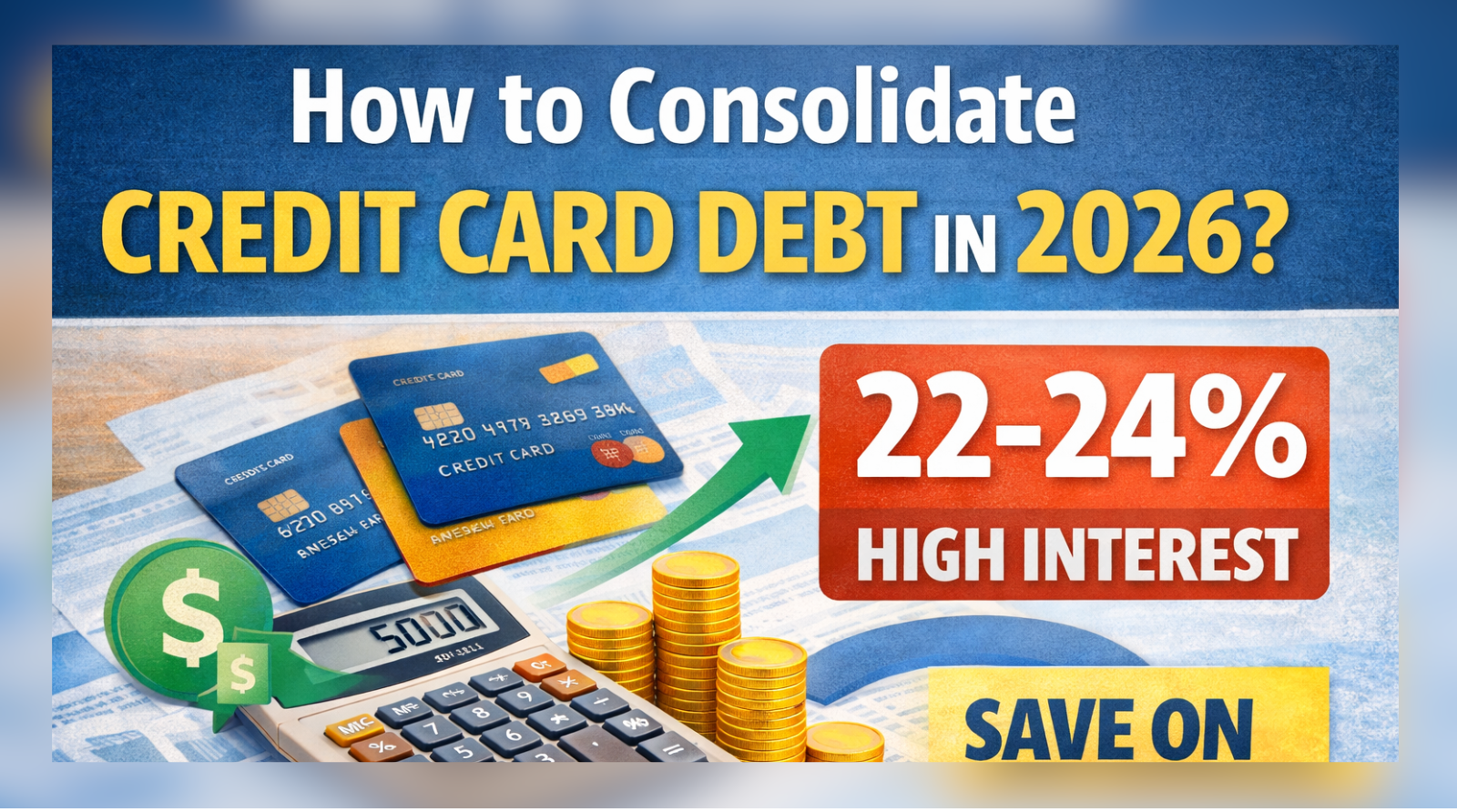
How to Consolidate Credit Card Debt in 2026?
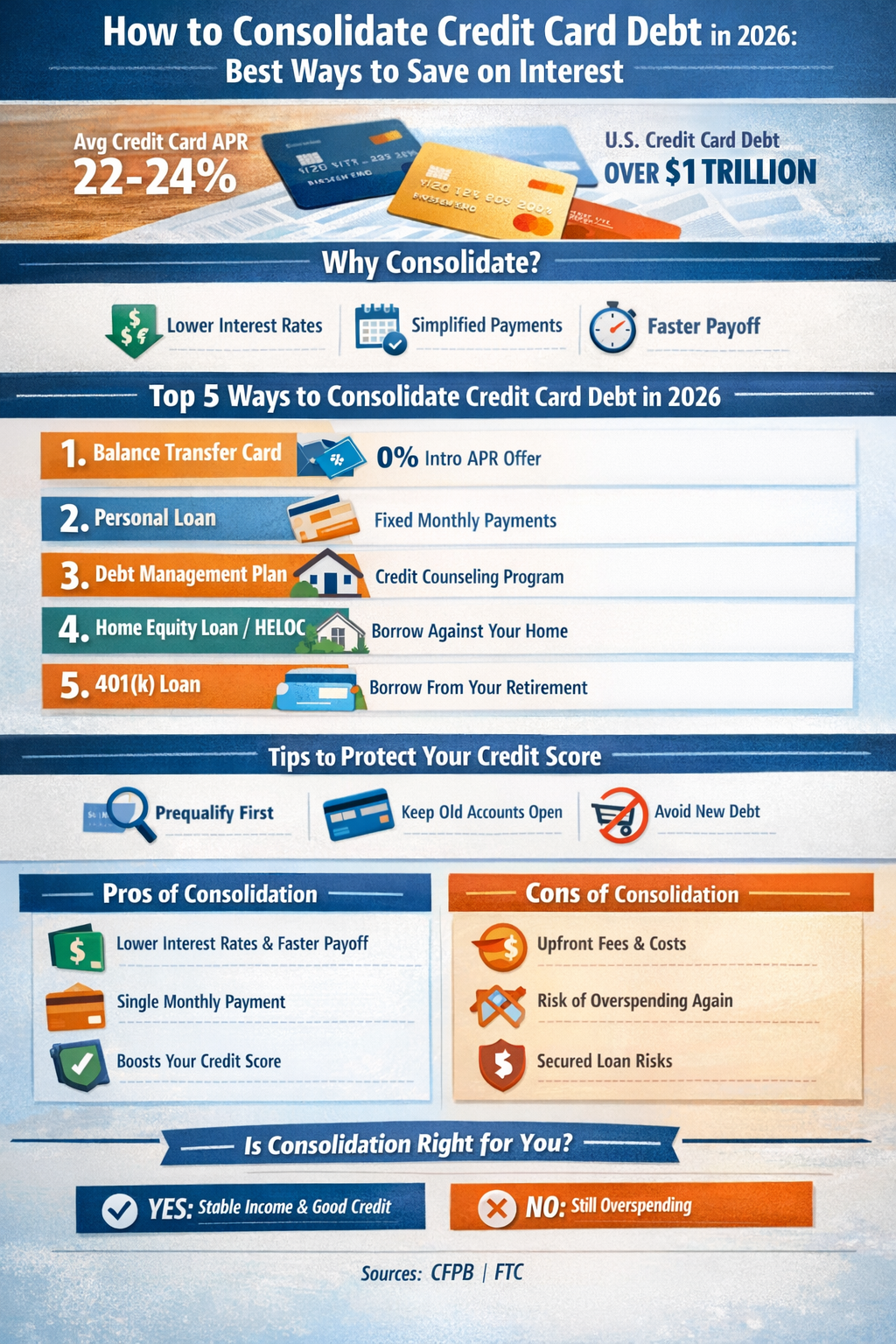
As we navigate the economic landscape of 2026, many Americans find themselves juggling multiple high-interest balances. With the average US credit card APR hovering between 22% and 24% and total national credit card debt reaching historic highs, the cost of “carrying a balance” has never been more expensive.
Credit card debt consolidation is the process of taking several high-interest credit card balances and combining them into a single monthly payment, ideally with a significantly lower interest rate. The goal is simple: stop the bleeding caused by compound interest so that more of your money goes toward the principal balance rather than the bank’s profits.
People choose to consolidate for three primary reasons:
- Lower Interest Rates: Saving thousands over the life of the debt.
- Simplified Finances: One due date instead of five.
- Faster Payoff: A structured timeline to become debt-free.
In this guide, we will explore the best strategies for 2026, how to protect your credit score during the process, and when consolidation is—and isn’t—the right move for your financial health.
What Is Credit Card Debt Consolidation?
At its core, consolidation is a refinancing strategy. It does not “erase” your debt; rather, it reorganizes it. Imagine you have four credit cards, each with a $2,500 balance and a 24% APR. By taking out a single $10,000 loan at 8% APR to pay them all off, you haven’t changed the amount you owe, but you have drastically changed how fast you can pay it back.
This strategy is most effective for individuals with $5,000 or more in high-interest debt. To see where you stand, it is helpful to understand how lenders evaluate risk before you apply for new terms. Successful consolidation shifts the focus from survival to conquering debt.
Best Ways to Consolidate Credit Card Debt in 2026
The “best” way to consolidate depends heavily on your current FICO score version and your total debt-to-income ratio. Here are the top five paths:
1. Balance Transfer Credit Card
For those with good to excellent credit, a 0% Intro APR balance transfer card remains the “gold standard.” In 2026, cards like the Wells Fargo Reflect® or Citi Simplicity® offer introductory periods of up to 21 months.
- Pros: 0% interest for nearly two years; 100% of your payment hits the principal.
- Cons: Requires a good credit score; usually involves a 3-5% transfer fee; the rate jumps significantly after the promo ends.
- Best for: Paying off debt within 12–21 months.
2. Personal Loan (Debt Consolidation Loan)
A personal loan provides a lump sum that you use to pay off your cards. You then pay back the loan in fixed monthly installments over 2 to 5 years.
- Pros: Fixed interest rates (often 5-10% for qualified borrowers); predictable loan amortization; no “available credit” to tempt more spending.
- Cons: Potential origination fees; requires a hard inquiry on your credit report.
- Best for: Borrowers with fair-to-good credit who want a structured 3-year plan.
3. Debt Management Plan (DMP)
If your credit score is too low for a loan, a nonprofit credit counseling agency can set up a DMP. They negotiate with your creditors to lower your interest rates in exchange for closing the accounts.
- Pros: Significant interest reduction; one payment to the agency; long-term credit health improvement.
- Cons: You must close your credit cards; small monthly admin fees.
- Best for: Those with bad credit or those who need a DIY credit repair alternative.
4. Home Equity Loan or HELOC
Homeowners can leverage their property’s value to pay off high-interest cards. Since the loan is “secured” by your home, the rates are among the lowest available.
- Pros: Tax-advantaged interest (sometimes); very low rates.
- Cons: If you fail to pay, you risk foreclosure. It is essential to weigh if homeownership is worth it before putting your roof at risk.
- Best for: Homeowners with significant equity and stable income.
5. 401(k) Loan
You can borrow from your own retirement savings. Since you are paying yourself back, there is no credit check.
- Pros: No impact on credit score; interest goes back into your account.
- Cons: If you leave your job, the loan may be due immediately; you miss out on compound interest gains in the market.
- Best for: A last-resort option when all other doors are closed.
How to Consolidate Credit Card Debt Without Hurting Your Credit?
Many worry that consolidation will ruin their score. While a mortgage inquiry or a personal loan application causes a temporary dip, the long-term effects are usually positive.
Long-term Boost: By paying off the revolving balances, you drastically lower your credit card utilization ratio, which is 30% of your FICO score.
Tips to Protect Your Score:
- Prequalify: Use lenders that offer a “soft credit check” first.
- Don’t Close Old Cards: Keep the old accounts open (with zero balance) to maintain your length of credit history.
- Avoid New Debt: Consolidation only works if you stop using the cards you just paid off. For a deeper dive, read why did my credit score drop.
Step-by-Step Guide
- Check Your Reports: Get free credit reports to ensure there are no errors. If you find one, follow our guide on found an error on your credit report.
- Audit Your Debt: List every card, balance, and APR. Use a budgeting tool to see how much you can realistically pay each month.
- Compare Options: Do the math. Will a 3% transfer fee on a 0% card cost less than a 7% interest rate on a personal loan?
- Apply and Execute: Once approved, ensure the funds actually pay off the old cards.
- Build Better Habits: This is the time to start an emergency fund so you don’t reach for the credit cards the next time the car breaks down.
Pros and Cons of Consolidating Credit Card Debt
| Pros | Cons |
|---|---|
| Lower Interest: Save thousands in interest and revenue losses. | Upfront Fees: Transfer fees or origination fees can add up. |
| Single Payment: Easier to manage with zero-based budgeting. | False Sense of Security: Feeling “debt-free” can lead to more spending. |
| FICO Score Boost: Lowers utilization and helps fix my bad credit. | Asset Risk: Secured loans put your home or car at risk. |
Is Debt Consolidation Right for You?
Consolidation is a tool, not a cure. It is right for you if you have a stable income and have addressed the reasons your budget isn’t working.
When to say YES:
- You have a credit score high enough to get a lower rate.
- Your total debt (excluding mortgage) is less than 40% of your gross income.
- You have a plan for values-based spending.
When to say NO:
- You haven’t stopped overspending.
- Your debt is so small you could pay it off in 6 months using the debt snowball vs avalanche method.
- Your credit is so poor that consolidation loans would have higher rates than your current cards.
Conclusion
Consolidating your credit card debt in 2026 is one of the smartest financial planning moves you can make if you are drowning in high-interest payments. Whether you choose a 0% balance transfer card or a structured personal loan, the goal is to stop paying for the “past” and start saving for your future.
Take the first step today: audit your debt, check your FICO score, and choose the path that leads to your dream life via budgeting.
External References:
- Consumer Financial Protection Bureau (CFPB) – Debt Consolidation Guide
- Federal Trade Commission (FTC) – Choosing a Credit Counselor
Frequently Asked Questions (FAQ)
1. How much does it cost to consolidate?
It varies. A balance transfer card usually costs 3-5% of the total. A personal loan might have a 1-6% origination fee. However, the investment risk tolerance of the lender determines your specific rate.
2. Does consolidation hurt my credit score?
Initially, you may see a small dip due to the hard inquiry. However, as you pay down the balances and lower your utilization, your score typically increases significantly within 3-6 months.
3. Can I consolidate without a loan?
Yes. You can use a Debt Management Plan through a nonprofit agency, which doesn’t involve a new loan but does require closing your existing credit lines.
4. What if I have bad credit?
If your score is low, look into how to rebuild credit after missed payments first. You might also consider a co-signer or a secured personal loan.
5. Is debt consolidation different from debt settlement?
Yes. Consolidation is paying back the full amount at better terms. Settlement is asking the creditor to accept less than you owe, which can significantly damage your credit report.